Research News Last updated 11 February
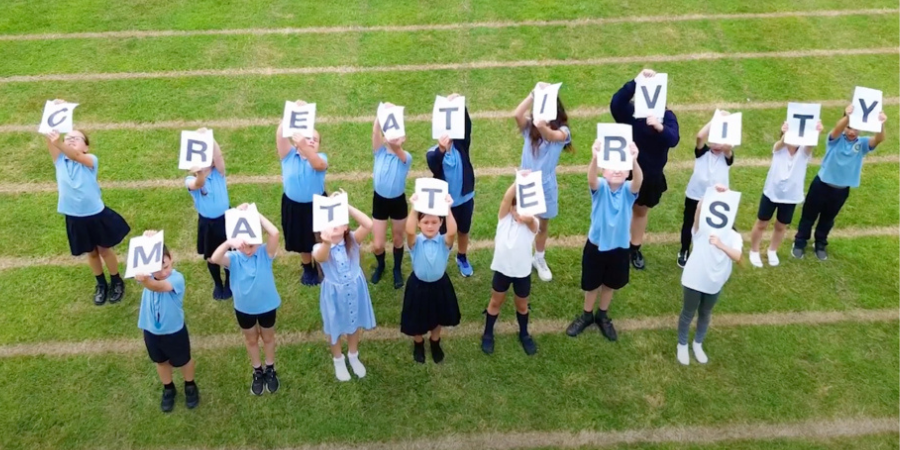
A new creativity framework co-developed by Birmingham City University (窪蹋勛圖厙) is helping teachers build more inclusive, imaginative and engaging classrooms across England.
啦堯梗泭Creativity Collaboratives programme, led by Durham University and Arts Council England, saw eight regional networks work with schools to encourage more creativity in curriculums.
More than 500 teachers and thousands of pupils took part, spanning primary, secondary, specialist schools, pupil referral units and early years settings.
, partnering with the and cultural stakeholders.
���We have seen classrooms shift, teacher confidence grow, and children engage in ways that honour different modes of thinking, communicating and creating,��� said Professor Victoria Kinsella, Professor of Education at 窪蹋勛圖厙.
���This work demonstrates that when schools are given the tools, time and trust to embed creativity across curriculum and practice, it becomes a driver for transformation.
���It���s shaping not only what children learn, but how they participate, contribute and see themselves.���
A key output from 窪蹋勛圖厙���s work is the Creativity Toolkit, a practical set of approaches designed to help teachers nurture creativity in more inclusive and accessible ways.
Schools were offered workshops, residences from cultural partners and support in building a framework of practice.
With Phase One complete, the next stage of the programme will focus on helping schools sustain these practices long-term and embedding the toolkit into daily teaching and learning.
���We found that Creativity Collaboratives is a model that works,��� said Dr Helen Cramman, co-author of the report and Associate Professor at Durham University���s School of Education.
���When schools collaborate with universities and partners to focus on teaching for creativity, teaching becomes more reflective and engaging.
���Through our extensive evaluation, we found that teachers felt re-energised, pupils were more engaged, and school communities grew stronger as a result.���
Nicholas Serota, Chair, Arts Council England, said: ���I have seen how Creativity Collaboratives have ignited children���s enthusiasm for learning, increased teachers��� confidence in the value of teaching for creativity, and supported schools to embed creativity across all subjects.
���At its heart, this work gives children and young people the skills they need to navigate an increasingly complex world.
���I look forward to seeing how participating schools continue to develop and expand this impact in the next phase.���
Photo credit: Arts Council England