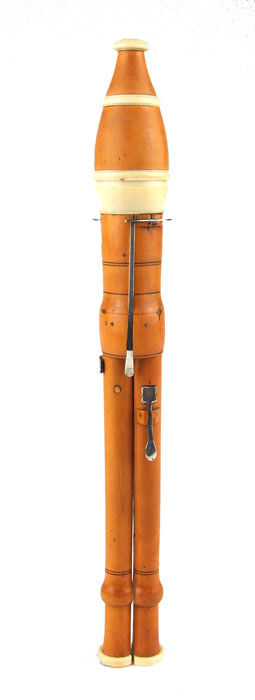
Double Flageolet in D
Catalogue Number: 1.2
Original name: Double flageolet in D.
Common name: Octave double flageolet or Octave flageolet.
Type or system: 5 Keys.
Maker: Bainbridge & Wood.
Place of origin: London, c.1808-1820.
William Bainbridge (d c.1831), was the inventor of the double flageolet, and patented his model in 1803. He was partnered by John Wood in 1808.
Overall size: 365mm without beak mouthpiece, 193mm each of lower joints.
Bore: Wind cap: 7.8mm - 34mm; head joint: lips - 34.5mm av. for both pipes; left hand pipe: 11mm - 7mm; right hand pipe: 11.2 - 7.1mm.
Sounding length: 273mm.
Diameter of beak receiver: 7.8mm.
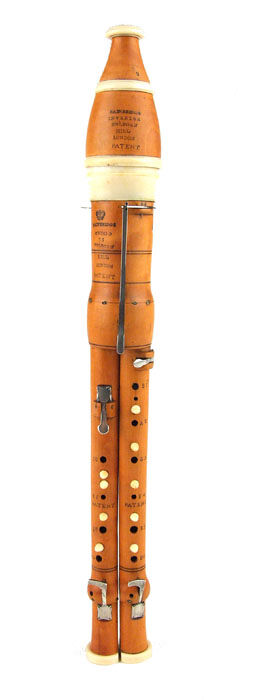
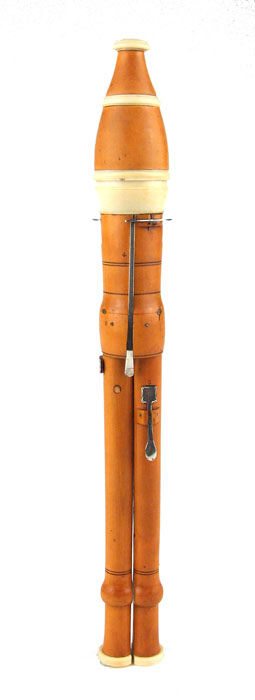
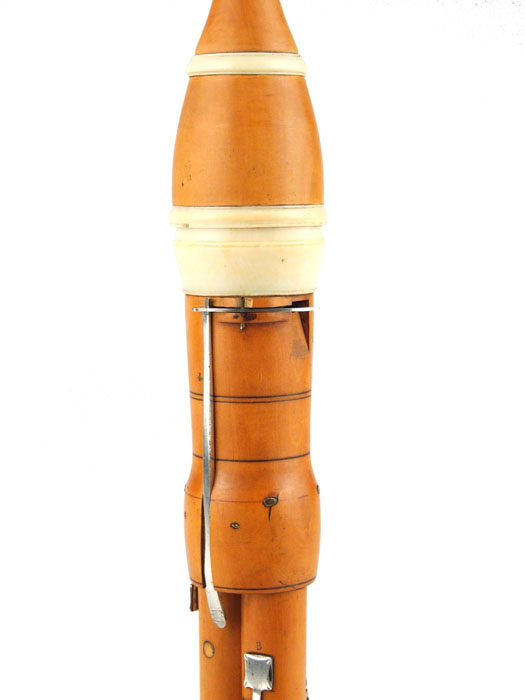
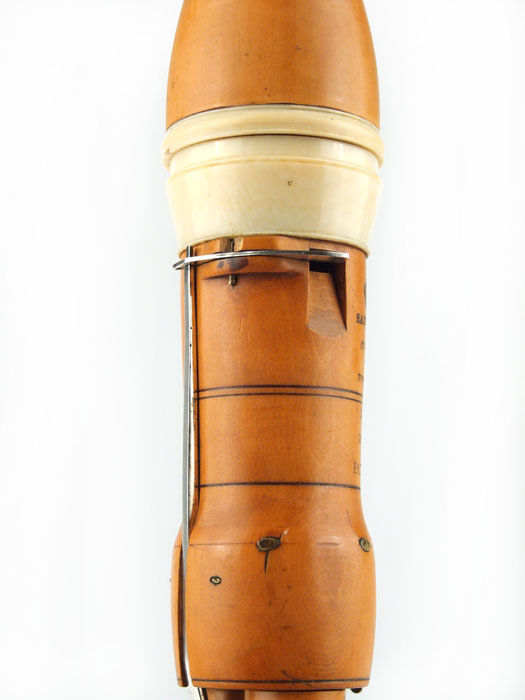
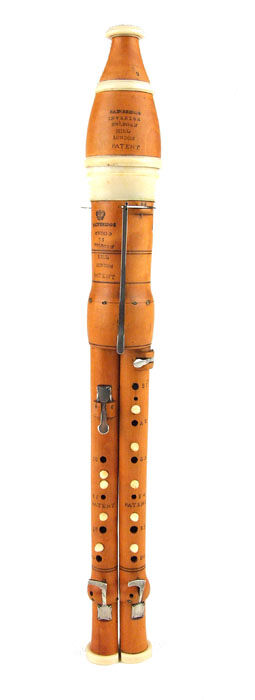
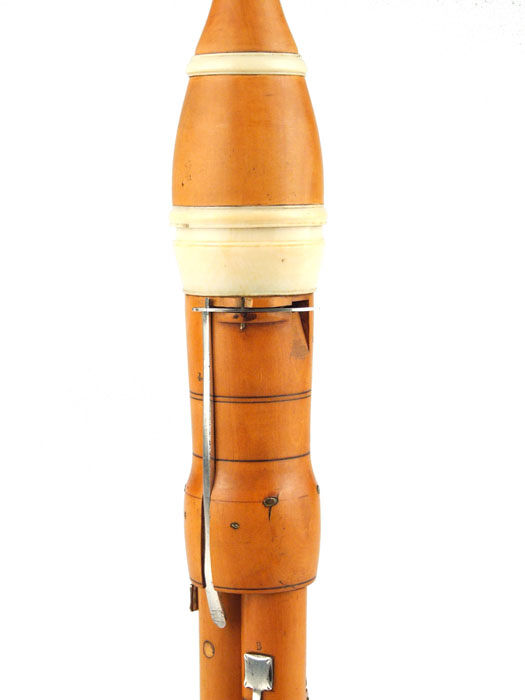
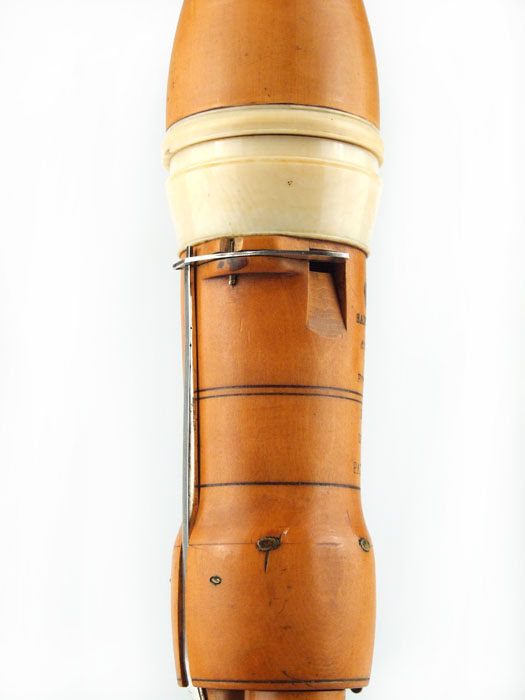
Technical description: Boxwood in four pieces with ivory ferrules and studs. Body: Two pipes, head joint and wind cap. (ivory beak mouthpiece missing).
Five silver keys with square flaps (flap design F ) mounted on raised blocks and rings with spring attached by rivets to the underside of the key.
Two silver cutters mounted on raised blocks (springs hidden from view).
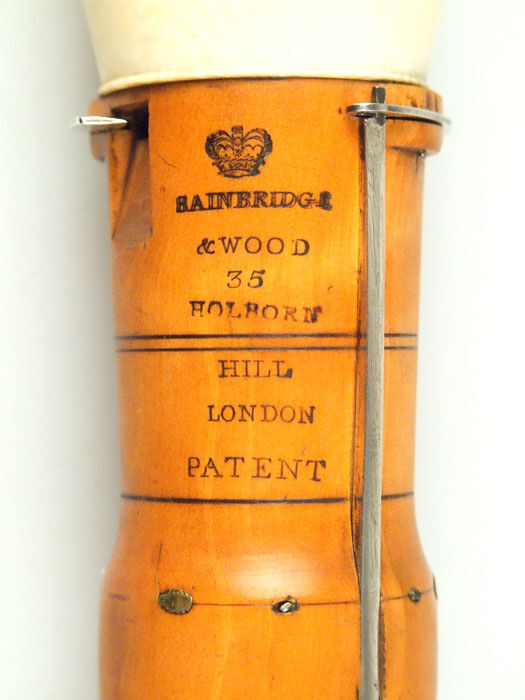
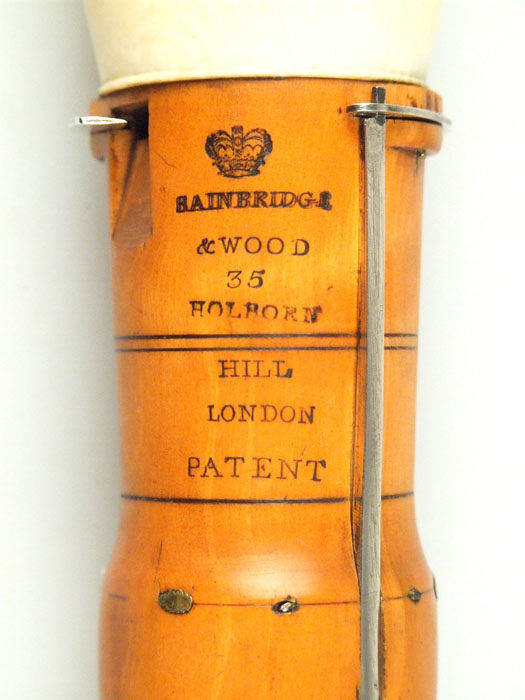
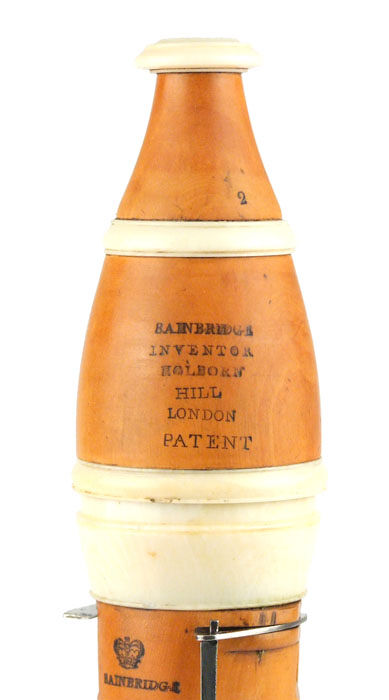
Inscription: Stamped on Wind cap: ���BAINBRIDGE / INVENTOR / HOLBORN / HILL / LONDON / PATENT���; Stamped on Head joint: (crown motif) / ���BAINBRIDGE / & WOOD / 35 / HOLBORN / HILL / LONDON / PATENT��� and next to right hand pipe cutter shank: [motif: cross]; stamped above left hand thumb key: ���D���; stamped next to each finger hole on left hand pipe: ���B1���, ���A2���, ���G3���, ���F4 / PATENT���, ���E5���, ���D6���; stamped above right hand thumb key: ���B���; stamped next to each finger hole on right hand pipe: ���B1���, ���A2���, ���G3���, ���F4 / PATENT���, ���E5���, ���D6���.
Faults: One crack on left hand pipe at the top of the joint.
General literature: The double flageolet - made in England.
Usable pitch: Plays at a��� = 440 Hz.
Performance characteristics: Keys stiff and some pads leaking but otherwise playable.
Specific references: New Langwill Index, pp. 16-17.
Illustration references: See below
Previous owner: Mr E. S. Fry. Donated to Birmingham School of Music, October 1923.
Previous collection numbers: A and B: Item 14.
Gallery of Images