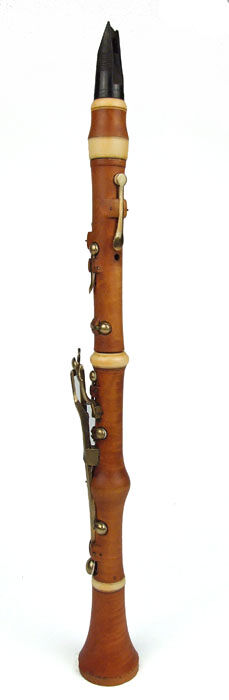
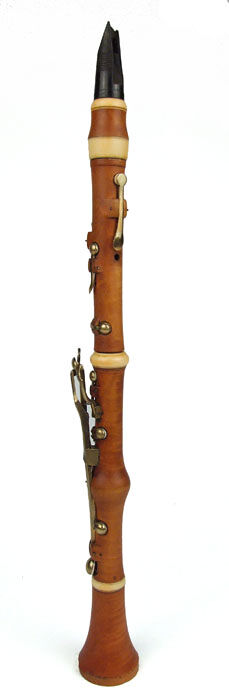
Clarinet in C
Catalogue number: 4.6
Original name: Clarinet in C.
Type or system: 11 Keys.
Maker: Goulding & Co.
Place of origin: London, c.1811/1812.
Overall size: 514mm total length not including mouthpiece.
Bore: Mouthpiece: 14.1mm; barrel: 13.9mm - 13.9mm; upper joint: 14.8mm - 12.9mm; lower joint: 13.2mm - 18.5mm; bell: 20.8mm - c.48mm.
Technical description: Four sections of boxwood and mouthpiece of dark wood. Mouthpiece: c.71mm (tip broken); barrel: 62mm (including metal tuning slide); upper joint: 190.5mm; lower joint: 229.5mm; bell: 98.8mm.
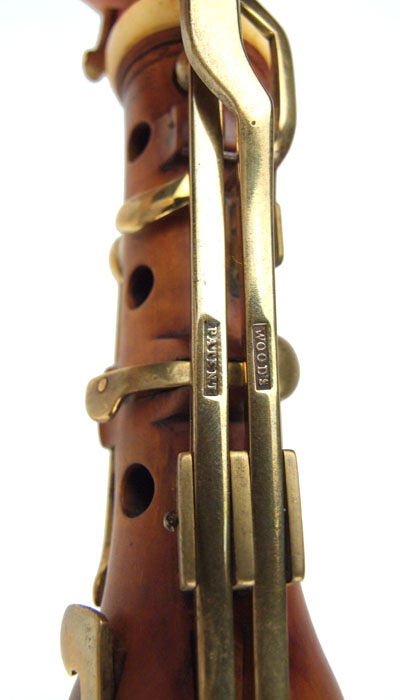
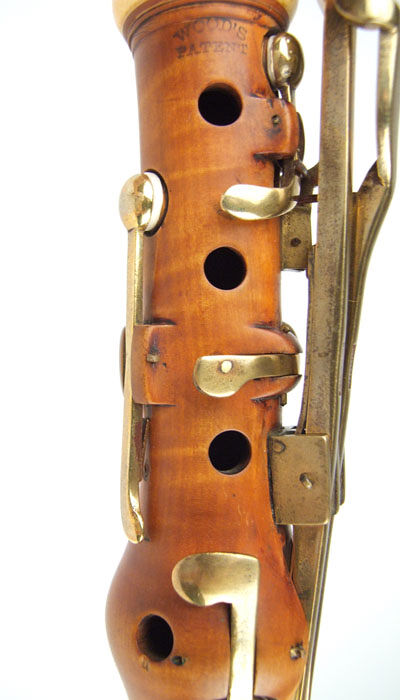
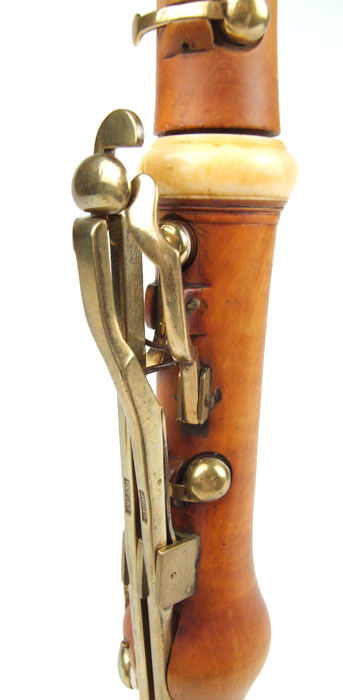
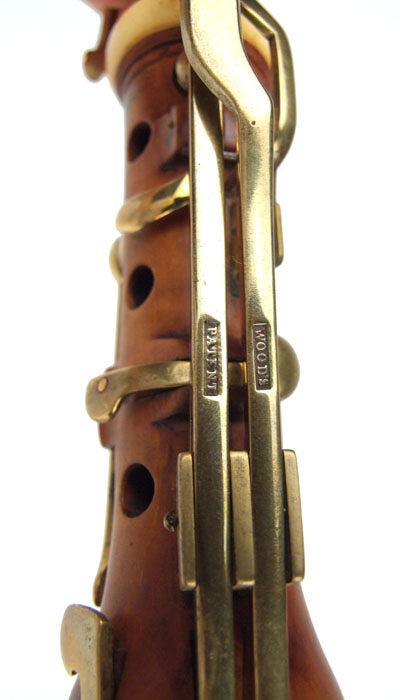
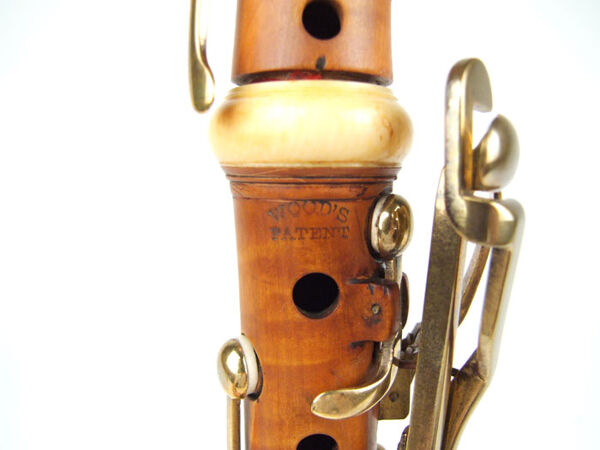
Metal tuning sleeve between barrel and upper joint. Eleven brass keys with round salt spoon style flaps. Nine mounted on raised blocks and rings, Low F sharp / C sharp; low E / B natural patent keys mounted on brass saddles. The ���patent��� stamped on middle joint may be the trill link key.
|
Key work and finger holes |
Finger hole diameter (av.) |
|
Left hand thumb: |
T; B flat / speaker |
|
Left hand, first finger: |
T; A flat; A natural |
|
Left hand, second finger: |
T; (A flat) |
|
Left hand, third finger: |
T; E flat / B flat |
|
Left hand, fourth finger: |
Low F sharp / C sharp; low E / B natural; trill link to C sharp / G sharp |
|
Right hand, first finger: |
T; A - B natural trill key |
|
Right hand, second finger: |
T; C sharp / G sharp |
|
Right hand, third finger: |
T; B flat / F natural |
|
Right hand, fourth finger: |
T; B natural / F sharp |
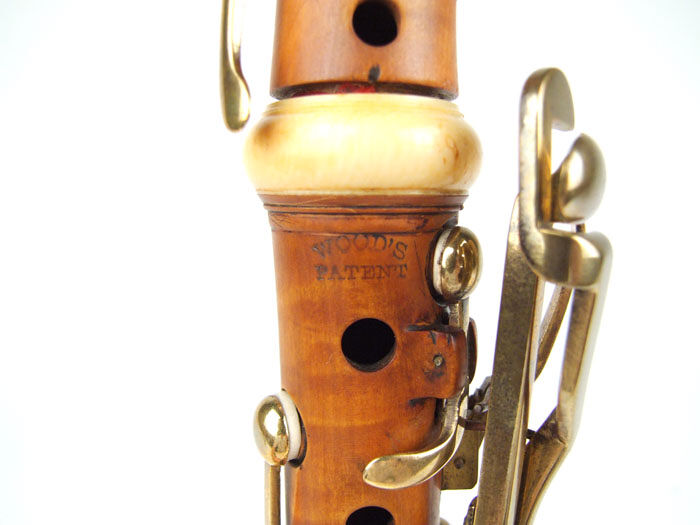
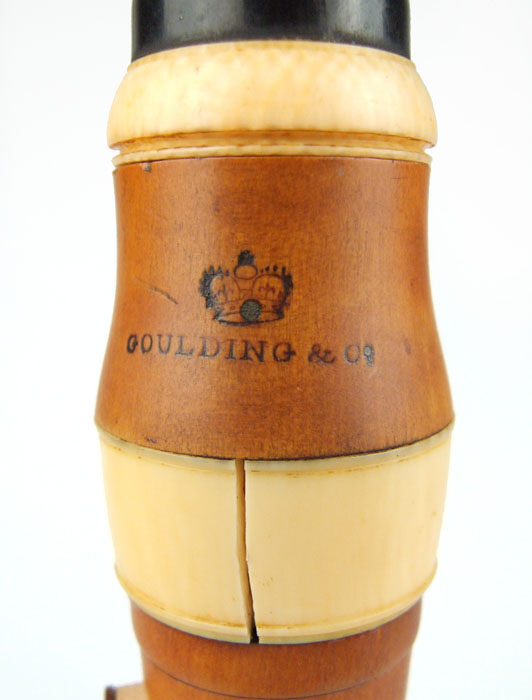
Inscription: Stamped on barrel and top joint: (motif: crown) / ���GOULDING & CO���; Stamped at the top of the middle joint: ���WOOD���S / PATENT��� (this probably refers to the trill link); Stamped at foot of the middle joint (motif: crown) / ���GOULDING���; Stamped on barrel: (motif: crown) / (motif: feathers) / ���GOULDING & D���ALMAINE / SOHO SQUARE / LONDON���; stamped on the low F sharp / c sharp key: ���WOOD���S���; stamped on the low E / B natural key: ���PATENT���.
Faults: Bell ferrule missing. Barrel ferrule cracked. Mouthpiece tip broken.
Usable pitch: Plays at a��� = 435 Hz.
General literature: James Wood was probably the ���inventor��� of the patent which is almost certainly the trill key.
Illustration references: See below
Previous collection numbers: A and B: 115.
Gallery of Images