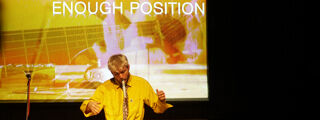
Experimental Performance may be a course that you didn't know existed. You might be wondering what exactly it entails and what makes it different to our other performance courses. Designed for emerging arts practitioners, Experimental Performance provides you with a unique opportunity to undertake independent artistic projects in a fully supportive environment.
WeÌýcaught up withÌýstudents James Mcilwrath and Tanna Chamberlain forÌýan insight into their experience on the course.
Why did you choose the course?
James: When I discovered the course, I was over the moon as it fitted exactly what I was looking for. I had made some experimental performances in collaboration with other composers and wanted to explore making more challenging work myself, as well as working with other experimental artists. As a composer, I would find it hard to fit into other composition courses as my work deals less with scores and writing for other performers. After researching the work of the tutors, I knew this was the right path for me to develop my compositional and performance practices.
Tanna: I came across the Experimental Performance course and the description said something along the lines of: “we take a concept and find the best artistic medium to realise that concept�, which really drew my attention, as it sounded like exactly what I wanted to do. I was in Canada at the time working in a law firm and I’d missed the application deadline, but I emailed anyway to see if they were still taking applications. They were.
How did you get into studying theÌýcourse?
James: At school I loved both theatre and music and was never fully satisfied with musicals being the conventional way of combining them. Contemporary music and new music theatre got me very excited, and I knew that I wanted to make things like that.
Tanna: I was stuck in a rut, working in offices for industries I didn’t care about, in cultures I didn’t like and in roles that bored me. I had doneÌýfull-timeÌýdance training a few years back and I’ve always been into music but felt unworthy to call myself a ‘musician’ because I couldn’t do things like play guitar chords or read piano music. Mostly, I just wanted to create things. I didn’t know exactly what. But I wanted to create things with purpose rather than blindly reproduce things without consideration.
What do you enjoy most about the course?
James: The course offers so much freedom to work outÌýhowÌýto create things.ÌýI enjoyÌýhaving access to theÌýRoyal BirminghamÌýConservatoire facilitiesÌýat the University, primarily The Lab - a malleable space that can fit everyone's wants and needs.ÌýI also enjoy theÌýconstant discovery of finding how IÌýmakeÌýdecisions on my work and the encouragement to try new things and make the best work I can.
Tanna:ÌýSeeing peers’ works-in-progress and collectively helping to shape their works. Also, artistic problem-solving - that feels very satisfying.
Did you find it easy to settle in when you first started?Ìý
James: Yes! The course is relatively small, so you get to know everybody very quickly. The tutors are also really engaged with us socially as well as academically so there is a lovely atmosphere on the course. Everyone who is on the course has come from a range of backgrounds and even work in vastly different mediums from myself, but we are all united on making work and nurturing creative ideas, not really fitting in from our previous places of study.ÌýÌý
Tanna:ÌýI would say I felt settled in within the second semester of first year, as it’s when I started to really understand what this course could do for me and what I could do for the course in return.
What have you achieved so farÌýduring your studies?
James: In my first year, I entered and won Nonclassical’s Battle of the Bands competition!Ìý I hadÌýmassiveÌýhelp fromÌýtheÌýtutors to shape and structure my performance. I’ve also been invited to perform at an array of concerts and performance venues in London, Birmingham, Dublin and The Hague.Ìý
During my time studying I also surprised myself by making an opera about a can of beans with a fellow student. I’m now continuing to study and research my work in a PhD.Ìý
Tanna: I’ve learned how to create and edit film and how to compose music using several workspaces I’d never previously heard of. I’ve become familiar with performance contexts, organised several successful concerts and events, and I’ve become confident discussing performance. I’ve found an artistic voice that feels authentic and learned to question and consider things in every area of life. I have also just been awarded this year’s MMus Course Prize for consistent achievement and commitment across all areas of the course.
What has been the most fun or interesting project or activity you have been involved with?
James: The tutors organise a residency forÌýtheÌýstudents on the course and guests from other departments to make work in a space over a week, which is then presented as a public concert.ÌýRecently.ÌýWorkingÌýon a short time scaleÌýin an interesting space with other creative artists is an absolute joy.Ìý
Tanna:ÌýI enjoyed ‘WednesdayÌýClub’ – a Wednesday afternoon collaboration experiment between several people with different backgrounds and interests.
What advice would you give to someone starting the course soon?
James: Be open and ready to change and develop. The course is about improving your work, not to have people tell you how good you already are. Be curious and confident and be ready to make things! The course is a minimum of two years for a good reason, it is a proper journey that allows you to really focus onÌýwhat your work is, why you have to make it and who the person behind the work is.
Tanna:ÌýKnow you’re already amazing. Be open to feedback. Be intrigued by failures. Go and see everything you can whilst it’s accessible. Speak your truth!
Experimental Performance
Find out more about this course