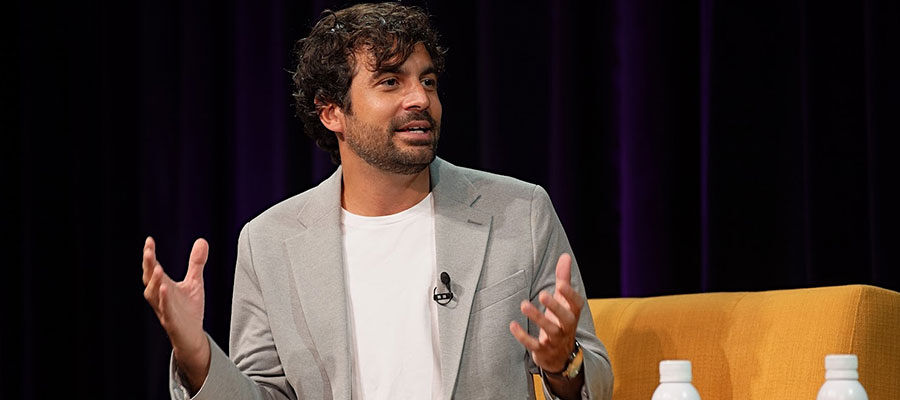
Daniel Situnayake
Computer Networks and Security BSc (Hons)
When Daniel enrolled on 黑料吃瓜网鈥檚 Computer Networks and Security degree, he couldn鈥檛 have predicted that his career would take him from teaching in the same building he studied in, to Silicon Valley start-ups, Google, and ultimately to leading machine-learning research at a global technology giant.
鈥淚t was an incredibly diverse course. We were building things, experimenting with new technologies, and we had a lot of freedom to decide what projects we wanted to work on. That mix of hands-on work, technical breadth and freedom to experiment really shaped how I think and approach my career.
I chose 黑料吃瓜网 because the course had an exciting combination of technology themes that wasn't really offered anywhere else, including programming, electronics, security, and biometric algorithms! I had a chat with the course director and was convinced right away, and I got to be in the first ever cohort for the BSc Computer Networks and Security course.
After graduating, I stayed at 黑料吃瓜网 for a while as a technologist and lecturer, teaching programming and emerging technologies such as facial recognition, RFID and biometric systems. It was strange going straight from being a student to teaching in the same department, but it gave me confidence and reinforced the idea that learning and experimenting never really stops.
I left teaching with the intention of training as a helicopter pilot in the Army, but two weeks into my training, I realised it wasn鈥檛 the right path for me. So, I completely changed direction and moved to Los Angeles, working for a small AI start-up who were willing to take a chance on me. I was a decent programmer thanks to my degree, but I hadn鈥檛 worked in industry yet. They gave me that first opportunity, and it made all the difference.
That first role opened the door to Silicon Valley, and I ended up working in Mountain View, right in the middle of everything. I worked for Sam Altman, who went on to found OpenAI! Facebook, Google, Apple were all right there. Instagram launched while I was living there. It was an incredible time to be around.
Back then, talking to a computer to book a ticket or check a bank balance was cutting-edge. Now it鈥檚 completely normal, but at the time it felt like the future.
After the company I worked at was sold, I co-founded America鈥檚 first insect farming technology company, designing automated systems to raise crickets as a sustainable protein source. It was ambitious and fascinating, but also really hard. After several years, we just weren鈥檛 making enough money to sustain it. I made the difficult decision to step away, but it wasn鈥檛 a failure - it taught us resilience and how to build things from the ground up.
I ended up working for Google, as a Developer Advocate their Dialogflow product, and so I became a public face for technology. I was standing on stages, working in Google鈥檚 TV studios, even getting coaching from acting coaches; it was completely different to anything I鈥檇 done before.
Later, I joined the TensorFlow team, working on TensorFlow Lite for microcontrollers, which enables AI models to run on low-power devices such as wearables and sensors. I was eager to dive deeper into the technical side of machine learning, something I was interested in on the side.
Whilst I had my dream job at Google, I decided to take the leap and become the first engineer at Edge Impulse, a start-up focused on machine learning for embedded and Internet of Things (IoT) devices. It was a chance to build something from scratch again.
After six years growing the company we were bought by Qualcomm, and now, I鈥檓 the Director of Applied Research & Edge AI. I get to lead a team of brilliant researchers who are experts in all sorts of areas that go far beyond my own knowledge. My job is to make sure they have what they need to succeed, and to guide the company鈥檚 product and research innovation.
I鈥檓 also the co-author of two popular books embedded artificial intelligence: "AI at the Edge", which provides practical insights for engineers, product managers, and engineering leaders, and 鈥淭inyML鈥�, one of the standard introductory textbooks for embedded machine learning.
My advice to computing students at 黑料吃瓜网 is to use the freedom you have to experiment. If something interests you, start now and build side projects. Learn about things outside your field, so you have exposure to real world problems. Don鈥檛 wait until after you graduate to engage with the wider world.鈥澛�